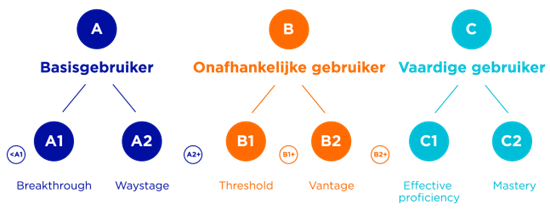
First read the instructions for students. Then assess the level of this text by ticking the descriptor boxes below.
Political Correctness
An ongoing debate, which really took off in the early nineties, occurred about political correctness and its relation with freedom of speech and democracy. In short, the debate is about whether an unrestricted freedom of speech is preferred or even possible, and whether or not this will have negative consequences for social-economic minorities. Examples of politically correct language users are, African-American instead of negro or Afro-American, fire fighter instead of fireman, Asian instead of oriental, and Native-American instead of Indian (Andrews, 1996). The list of terms like these is endless. It is said that without the use of such politically correct terms, as a consequence this will eventually lead to a negative image of minority groups, stereotyping and certain prejudices. In addition, outcasts are created in a society. However, opponents of political correctness emphasize that the presence of political correctness in a society also leads to this same creation of outcasts. Moreover, the threat that political correctness poses for the freedom of speech is of greater importance than the earlier mentioned disadvantages, especially when one bears in mind the fact that people have a negative image of certain groups is more important than the way this negative image is being expressed.
First of all, the fact that political incorrect behavior towards certain minorities leads to a negative image of these minorities is probably the main reason why politically correct language is stimulated. The negative image that is seen in, for example, stereotypes and prejudices, arises from the generalization of own experiences with members from a certain group and from the negative information that is received from the media or by education (Shadid,1999). The media is an important factor in this issue. Stating that research has been done in order to examine the influence of the media can be seen as an understatement. Much of this research pointed out the influencing factor of the media is keeping the negative image around ethnic minorities alive. Therefore, supporters of political correctness emphasize the importance of politically correct language use in the media. This would lead to more equality in a society.
In addition, the use of politically incorrect language is said to create outcasts in the society. For example, the media have the tendency to explain the high rate of unemployment amongst ethnic minorities solely by aspects related to the group itself, like a language barrier or a lack of education. This is seen as politically incorrect because there are many other aspects, such as intentional and non-intentional discrimination, that are of influence on the employment rate of ethnic minorities (Shadid, 1999). However, it is assumed that, in general, the media do not create the negative image around ethnical minorities on purpose, and neither do they wish these groups to become outcasts in the society. It is more a consequence of several unavoidable aspects that are inherent to functioning of the media.
It can still be argued that, despite these possible negative consequences for certain ethnic minorities, political correctness can be seen as an instrument of censorship and is used to steer reality into a certain preferred direction. In other words, political correctness is a form of manipulative propaganda and is a suppressor or criticism. As Whittaker-Khan (2007) stated: "Dishonor and political correctness are the companions of censorship; we have to get past them with whatever non-violent steps are effective".
As stated earlier, the use of politically incorrect language can create outcasts and negative images. However, the mere presence of political correctness in a society can also lead to this distinction between different groups. In its attempt to eliminate racism and discrimination, politcal correctness commits discrimination itself. In their strive to the most ideal world and equality and their plead for positive discrimination of certain minority groups, proponents of political correctness often do not realize that they are committing the evils they criticize (Ayim, 1998). By emphasizing the fact that certain groups need to be treated as minorities, these minorities will never be seen as full members of a society. In this way, the use of politically correct language leads to the creation of outcasts and keeps the negative image about these outcasts, that political correctness proponents are said to hate the most, alive.
Furthermore, the most important argument people have against politically correct use of language is the fact that is has resulted in a threat to the freedom of expression. Political correctness has its emphasis on an anti-sexist and anti-racist policy and, therefore, is an attempt to regulate and control the way of speaking or writing. This regulation would only be based on what political correctness proponents identify as racist or sexist. Any such legislation obviously would interfere with every citizen's right to freedom of expression (Ayim, 1998). The friction between political correctness and freedom expression has its roots in the Constitution. The First Amendment concerns matters such as freedom of speech and freedom of expression, the Fourteenth Amendment concerns matters such as equality, civil rights, and the right not to be offended. Obviously, the right not to be offended can sometimes be in conflict with freedom of speech. For example, a member of the Christian church has the right of freedom of speech and, therefore, is able to "insult" homosexuals based on his religion. These homosexuals, however, have the right not to be offended and thus, a paradox is born.
The point is, this paradox will exist as long as the Constitution exists. People will always be offended by what other people say or feel. Political correctness only bans certain words or expressions to the dark corners of a society, while it would be better to talk openly about these words or expressions and discuss why they are hurtful to certain people (Huntington, 1993). An experiment done by Norton, Sommers, Apfelbaum, Pura and Ariely (2006) showed that white people were less likely to use race as descriptor in the company of a black person that with a white person. In addition, the avoidance of race was seen in a less friendly attitude towards black partners during the experiment. They also made less eye-contact with their black partners. This experiment was done not too long ago and pointed out that there still exists certain prejudices towards other groups. Whether a Negro is now called an African-American, or an oriental is now called an Asian does not change the situation. Again, it would be better to discuss why these people appeared less friendly and made less eye-contact with members of other groups. The fact that they hold certain prejudices is more important that the way they express it. "We may even have to accept, and learn to tolerate the notion, that despite all our education and all our good intentions, there will always be those in our society who are not and who never will be 'politically correct'. And that's OK. The First Amendment protects them too" (Huntington, 1993).
It is also believed that the conflict between political correctness and freedom expression can eventually lead to a threat for democracy. The freedom of speech is seen as a cornerstone of democracy and democracy is therefore being undermined in order to protect minorities and victims of discrimination (Ayim, 1998). However, this is maybe too much credit for a term such as political correctness. As stated before, the fact that people hold certain prejudices towards other groups is more important than the way they express it.
From the same perspective, political correctness also has a negative influence on the academic world. Due to the fact that certain people are in the position to say whether or not something is politically correct, the academic freedom is endangered. Professors should be able to have the freedom to decide what is taught and discussed, without having to consider if it is politically correct and part of the prescribed doctrine (Ayim, 1998). Moreover, political correctness also leads to a limitation on academic freedom at an institutional level. "At the institutional level, universities are depicted as only able to do their job, or at the very least, able to do their job better, if untrammelled by other forms of social or governmental censorship" (Ayim, 1998). Universities are said to handle problems concerning harassment and discrimination better without governmental intervention. Some fear that this censorship will lead to the start of fair language policies at universities, and eventually all over the world.
In short, it can be said that it is clear that political incorrect behavior towards certain minorities can lead to a negative image of these minorities and can create outcasts in a society. The media are an important factor of influence in this matter. Several research have shown the influence of the media in creating and maintaining a negative image around ethnic minorities. However, the mere presence of political correctness in a society also creates outcasts in a society and proponents of political correctness often do not realize that they themselves are actually discriminating by always emphasizing the fact that certain groups are a minority.
Political correctness can also lead to a limitation on academic freedom. Universities and professors should be able to have the freedom to decide what is taught and discussed, without having to consider if it is politically correct and part of the prescribed doctrine. This is in consensus with the main argument that exists against political correctness, the conflict that occurs with freedom of expression. Political correctness has its emphasis on an anti-sexist and anti-racist policy and, therefore, is an attempt to regulate and control the way of speaking or writing. This regulation would only be based on what political correctness proponents identify as racist or sexist, and, therefore, is a threat to the freedom of speech. This conflict has its roots in the Constitution and this friction will always exist. People will always be offended by what other people say or feel. It would be better to talk openly about these words or expressions and discuss why they are hurtful to certain people. The fact that people hold certain prejudices and stereotypes is more important than the way they are expressed. Afro-American or African-American, what is the difference? Andrews (1999) perfectly worded it with: "The nonlinguistic issues involve racial, ethnic, gender-based, and other tensions in our modern world, which are the result of prejudice, inequality, oppression, and other forms of injustice in contemporary American society. These are real and serious problems that deserve serious solutions. However, there is another question that must be addressed in this context - does a linguistic response, lexical substitution, solve the extralinguistic problems in our society or even facilitate future solution of such problems?"
(Source: EMBED project, © University of Groningen)